


Sensory-Friendly Santa Stops from Autism Speaks

Free Santa Experiences welcome children of all ages and abilities!
Autism Speaks is once again partnering with Cherry Hill Programs this holiday season to provide free, sensory-friendly Santa Experiences for families across the country.
All families of children with autism and other special needs can enjoy a visit with Santa in a more subdued and calm environment.
Santa stops in Illinois begin Dec. 2 and are scheduled for communities including:
- Aurora
- Chicago Ridge
- Fairview Heights
- Gurnee
- Joliet
- Lincolnwood
- Lombard
- Orland Park
- Peoria
- Schaumburg
- South Barrington
- Springfield
- Rockford
- West Dundee
Go to the Autism Speaks website for the full list of Cherry Hill Programs Santa Photo Experiences in Illinois and to reserve your spot.
Sensory-friendly Santa events are free and keepsake photo packages will be available for purchase.
For more Santa visits and other Christmas-related events for children with special healthcare needs in Illinois, be sure to check our Events page.
Options for Voters with Disabilities
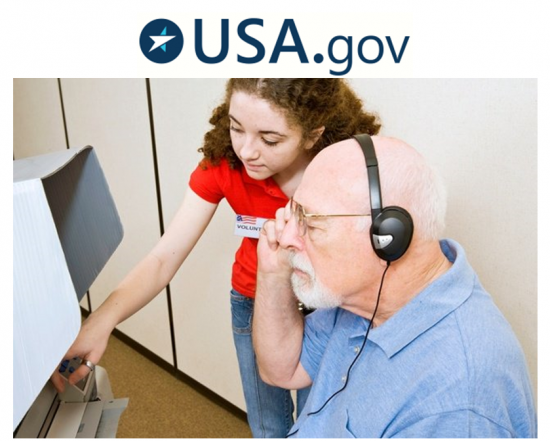
Learn more about your rights and options with USAGov’s Guide for Voters with a Disability.
Election Day is right around the corner. Do you know if your polling place is accessible? Do you need accommodations?
USAGov has developed a step-by-step guide to help you plan accordingly and know your rights before heading to the polls.
The Guide for Voters with a Disability provides helpful suggestions, including calling your local elections office in advance to find out what accessible accommodations are available at your polling place.
You can also go to Vote.gov to register to vote or check if your registration is up-to-date
Free Mammograms in Central Illinois Through October

Mammogram Mondays provide free screening mammograms for uninsured and under-insured women age 40 and older.
It’s important that mothers and female caregivers of children with special needs take care of their own health and wellness.
The Regional Cancer Partnership of Illinois, with funding provided by the Memorial Affiliate of Susan G. Komen, is sponsoring free screening mammograms on Mondays in October.
Mammogram Mondays are for women ages 40 and over who are uninsured or under-insured. They are scheduled for Oct. 1, 8, 15, 22 and 29 at the following locations:
- St. John’s Women’s Center, S. Sixth St., Springfield
For appointments from 8 to 11 a.m. or 1 to 4 p.m., call St. John’s at (217) 757-6400, ext. 3. - Baylis Breast Center, 747 N. Rutledge, Springfield
For appointments beginning at 4 p.m., call Memorial’s Mammography at (217) 788-4042. - Abraham Lincoln Memorial Hospital, 200 Stahlhut Drive, Lincoln
To schedule an appointment, call (217) 605-5108. - Taylorville Memorial Hospital, 201 E. Pleasant St., Taylorville
To schedule an appointment, call (217) 824-1865. - Hillsboro Area Hospital, 1200 E. Tremont St., Hillsboro
To schedule an appointment, call (217) 532-4196.
Tips to Avoid Heat-Related Illnesses

Learn the signs of heat-related illnesses and how to prevent them.
A predicted heat wave for most of the state could bring a dangerous mix of high temperatures and high humidity.
Illinois Department of Public Health (IDPH) Director Nirav D. Shah, M.D. is reminding people about the importance of staying cool in order to avoid heat-related illnesses like heat exhaustion and heat stroke.
“Hot weather can cause heat-related illness which ranges in severity from relatively mild heat cramps to life-threatening heat stroke. It’s important for people to recognize the signs of heat-related illness and take action to prevent becoming sick,” said Director Shah. “Normally, the body cools itself by sweating. However, if temperatures and humidity are extremely high, sweating is not effective in maintaining the body’s normal temperature. If the body does not cool properly or does not cool enough, a person may suffer a heat-related illness, which can become serious or even deadly.”
IDPH has put together an easy-to-read chart of heat-related illnesses, what to look for, and what to do. You can access it at IDPH Heat Safety Tips.
Heat-related death or illnesses are preventable if you follow a few simple steps.
- Stay in an air-conditioned area during the hottest hours of the day. If you don’t have air conditioning in your home, go to a public place such as a shopping mall or a library to stay cool. Cooling stations and senior centers are also available in many large cities for people of all ages. To find cooling centers in state facilities, visit https://www2.illinois.gov/sites/KeepCool/SitePages/CoolingCenters.aspx.
- Wear light, loose-fitting clothing.
- Drink water often. Don’t wait until you are thirsty.
- Avoid unnecessary hard work or activities if you are outside or in a building without air-conditioning.
Air conditioning is the strongest protective factor against heat-related illness. Exposure to air conditioning for even a few hours a day will reduce the risk for heat-related illness.
Never leave anyone, including pets, alone in a closed, parked vehicle. The air temperature inside a car rises rapidly during hot weather and can lead to brain damage or death.
Visit the IDPH website for more heat-related information.
Healthy Foods Distributions in Central Illinois

Free events providing fresh produce, milk and other nutritious items.
The Central Illinois Foodbank is holding “Healthy Foods Distribution” events throughout central Illinois this summer.
The foodbank partners with a host site to secure a parking lot and volunteers to help with the distribution.
On average, a Healthy Foods Distribution will give away about 12,000 pounds of food in under two hours. These distributions are arranged in “farmers market style,” allowing guests to roam among the pallets of food.
The events are free and open to anyone. Available food includes fresh produce, 2 percent milk and other nutritious foods.
No personal identification or documents are needed. Please bring sturdy carts, wagons, boxes or bags to carry your food.
A list of upcoming Healthy Food Distributions is below:
- July 14, 9 a.m. to 10 a.m., in Decatur
Youth with a Positive Direction, 2000 N. Main
Sponsored by ADM - July 19, 6 to 7 p.m., in Springfield
Capital City Church of God. 2501 E. Cook
Sponsored by Capital City Church of God
This event is open to families with children. - July 21, 9 to 10 a.m., in Windsor
Windsor Christian Church, 1101 Broadway
Sponsored by Windsor Christian Church - Aug. 11, 10 to 11 a.m., in Quincy
Quincy Senior Center, 639 York St.
Sponsored by Dot Foods - Aug. 18, 9 to 10 a.m., in Springfield
SIU Center for Family Medicine, 520 N. 4th St. - Oct. 6, 10 to 11 a.m. in Quincy
Quincy Senior Center, 639 York St.
For more information, visit https://www.centralilfoodbank.org/About-Us/our-programs/healthy-foods-distributions.
Tips to Avoid Tick- and Mosquito-Borne Illnesses
Learn what you and your family can do to avoid insect bites this summer.
Summer is here and so are the outdoor pests. But insect bites are much more than an itchy inconvenience. They can spread disease and cause serious health problems.
The Illinois Department of Public Health (IDPH) is reminding people about simple precautions they can take to avoid bites.
“Ticks can carry diseases like Lyme disease, spotted fever, and ehrlichiosis, while mosquitoes can carry West Nile virus,” said IDPH Director Nirav D. Shah, M.D., J.D. “These diseases can cause anywhere from mild to severe illness, and even death in some cases. To protect yourself from both, use insect repellent that contains DEET and follow some simple precautions.”
According to the Center for Disease Control and Prevention, disease cases from mosquito, tick and flea bites have tripled in the U.S. during the 13 years from 2004 through 2016. Reported cases from mosquito and tick bites in Illinois have increased by more than half (58 percent) from 2005 to 2016.
Ticks
Many tick-borne diseases have similar symptoms. The most common symptoms can include fever, chills, aches and pains, and rash. Within two weeks following a tick bite, if you experience a rash that looks like a bull’s-eye or a rash anywhere on your body, or an unexplained illness accompanied by fever, contact your doctor. Early recognition and treatment of the infection decreases the risk of serious complications. Tell your healthcare provider the geographic area in which you were bitten or traveled to help identify the disease based on ticks in that region.
A fairly new virus called Bourbon virus has been associated with tick bites and has been found in a limited number of cases in the Midwest and southern U.S. People diagnosed with Bourbon virus disease have symptoms including fever, fatigue, rash, headache, other body aches, nausea and vomiting. They also had low blood counts for cells that fight infection and help prevent bleeding. Some people who were infected later died.
Ticks are commonly found on the tips of grasses and shrubs. Ticks crawl — they cannot fly or jump. The tick will wait in the grass or shrub for a person or animal to walk by and then quickly climb aboard. Some ticks will attach quickly and others will wander, looking for places like the ear or other areas where the skin is thinner.
Simple tips to avoid ticks bites include:
- Wear light-colored, protective clothing—long-sleeved shirts, pants, boots or sturdy shoes, and a head covering. Treat clothing with products containing 0.5 percent permethrin.
- Apply insect repellent that contains 20 percent or more DEET, picaridin, or IR3535 on exposed skin for protection that lasts several hours.
- Walk in the center of trails so grass, shrubs, and weeds do not brush against you.
- Check yourself, children, other family members, and pets for ticks every two to three hours.
- Remove any tick promptly by grasping it with tweezers, as close to the skin as possible and gently, but firmly, pulling it straight out. Wash your hands and the tick bite site with soap and water.
Mosquitoes
The most common mosquito-borne illness in Illinois is West Nile virus. West Nile virus is transmitted through the bite of an infected Culex pipiens, or “house” mosquito. Mild cases of West Nile virus infections may cause a slight fever or headache. More severe infections are marked by a rapid onset of a high fever with head and body aches, disorientation, tremors, convulsions and, in the most severe cases, paralysis or death. Symptoms usually occur from three to 14 days after the bite of an infected mosquito. However, four out of five people infected with West Nile virus will not show any symptoms. People older than 50 are at higher risk for severe illness from West Nile Virus.
There are some simple precautions you can take to Fight the Bite. Precautions include practicing the three “R’s” – reduce, repel and report.
- REDUCE – make sure doors and windows have tight-fitting screens. Repair or replace screens that have tears or other openings. Try to keep doors and windows shut. Eliminate, or refresh each week, all sources of standing water where mosquitoes can breed, including water in bird baths, ponds, flowerpots, wading pools, old tires, and any other containers.
- REPEL – when outdoors, wear shoes and socks, long pants and a long-sleeved shirt and apply insect repellent that contains DEET, picaridin, oil of lemon eucalyptus or IR 3535, according to label instructions. Consult a physician before using repellents on infants.
- REPORT – report locations where you see water sitting stagnant for more than a week, such as roadside ditches, flooded yards and similar locations that may produce mosquitoes. The local health department or city government may be able to add larvicide to the water, which will kill any mosquito eggs.
Additional information about ticks and mosquitoes can be found on the IDPH website.
Program Provides Free, Healthy Meals and Snacks for Children

Program open to all youth age 18 and under to fill the nutritional gap during the summer months.
Many Illinois families depend on their children’s schools to provide regular, healthy meals. The Illinois State Board of Education manages the Summer Food Service Program (SFSP) to provide children continued access to free and nutritious meals and snacks during the summer months when school is out.
The SFSP program serves children and teens age 18 and younger.
To find a meal site near you, call (800) 359-2163, text “FoodIL” to 877-877 or visit http://summerfeedingillinois.org/.
“Children need healthy food during the summer as much as they need it during the school year,” said State Superintendent of Education Tony Smith, Ph.D. “The Summer Food Service Program brings critical resources to communities across the state and helps all our children stay ready to learn. ISBE is proud to administer the Summer Food Service Program.”
To learn more about this year’s SFSP program, read the State Board of Education’s SFSP news release.
Disaster Preparedness Tips for People with Special Needs and Caregivers
IEMA highlights importance of disaster preparedness for people with functional and access needs during the month of May.
While most disasters can’t be prevented, the stress of such situations can be reduced significantly through personal preparedness. This preparation is particularly important for households with members who have disabilities, functional needs or may need assistance during an emergency.
Throughout May, the Illinois Emergency Management Agency (IEMA) and local emergency management agencies are highlighting the importance of disaster preparedness for people with functional and access needs.
“Disasters can cause power outages, force people to evacuate their homes or create other dangerous situations,” said IEMA Acting Director William P. Robertson. “We encourage everyone to be prepared, especially those who may have medical, functional or access needs.”
Robertson said IEMA has information available on the Ready Illinois website (www.Ready.Illinois.gov) to help people and caregivers prepare for emergencies. A guidebook, “Emergency Preparedness Tips for Those with Functional Needs,” offers preparedness tips for people with visual, cognitive or mobility impairments; people who are deaf or hard of hearing; those who utilize service animals or life support systems; and senior citizens.
For each functional need, the guidebook provides a list of supplemental items for a disaster kit, tips on developing an emergency plan, suggestions on how to be better informed about community emergency planning and a checklist of preparedness activities.
The Ready Illinois website also offers more than two dozen preparedness videos in American Sign Language on such topics as what to do before, during and after tornadoes; severe thunderstorms and flooding; how to build an emergency supply kit; and what to do if you’re instructed to evacuate. These resources and more can be found on Ready Illinois’ Functional Needs page.
Internship Opportunities for Suburban Cook County Youth

Opportunity Works places young adults in subsidized internships, exposing them to viable careers in a variety of sectors.
Opportunity Works is a program that provides sector-driven internships for young adults between the ages of 16 and 24 in suburban Cook County
More than 33,000 young adults are disconnected from both work and school in suburban Cook County. At the same time, many employers report a shortage of skilled workers.
Opportunity Works trains participants and connects them with businesses that are looking for new employees. If you are selected for this program, you will participate in a paid internship that will expose you to exciting careers that you may not have thought about before. Opportunity Works will also connect you to the resources you need to get a good paying job.
This program targets southern and western suburbs but will be open to all of suburban Cook County, offering sector-specific training in these fields:
- Manufacturing
- Information Technology
- Transportation, Distribution, and Logistics
Interested youth can fill out the Opportunity Works application online.
To learn more, call (312) 603-7092 or visit the Opportunity Works website.
State Police Provide Safe Option for Medication Disposal

Drug collection receptacles are available at five state police headquarters across the state.
Five Illinois State Police District headquarters across the state are providing receptacles for people to drop off their unused and unwanted prescription medications. The headquarters are in:
- Des Plaines
- Elgin
- Joliet
- Collinsville
- LaSalle
The receptacles are available through a partnership between the Illinois State Police (ISP) and Save A Star Drug Awareness Foundation to help decrease prescription and over-the-counter drug abuse.
“Many people experiment with prescription drugs before turning to more dangerous, illegal drugs,” Gov. Bruce Rauner said. “These receptacles offer people a smart and safe way to get potentially addictive drugs out of their homes and off the streets.”
Save A Star Drug Awareness Foundation provided the receptacles for initiative. The foundation was created by David and Gail Katz, whose son died in 2007 from an overdose of prescription medication.
“Each day, about 2,500 teens use prescription drugs for non-medical use for the first time. Prescription pills are now killing more of our youth than cocaine, heroin and methamphetamine combined,” David Katz said. “Save A Star is pleased to partner with the Illinois State Police to help avoid future tragedies.”
People will be able to drop over-the-counter and prescription medications into the receptacles, including controlled substances, pet medications, drug samples, vitamins, liquids and creams. For safety reasons, the following items CANNOT be accepted and should NOT be deposited into the receptacles:
- Needles
- Thermometers
- IV Bags
- Bloody waste
- Hydrogen peroxide
“Prescription drug abuse is a real issue and unfortunately, it’s all too often the gateway to opioid drug addiction.” ISP Director Leo P. Schmitz said. “These receptacles will help us keep drugs out of the wrong hands and will reduce the odds for accidental overdoses and future drug dependency.”
The initiative is part of the state’s effort to reduce opioid-related deaths in Illinois by 33 percent in three years. If you or someone you know is struggling with opioid use disorder, call Illinois’ Opioid Helpline at 1-833-2FINDHELP.